

If you’ve just spotted water dripping from your boiler or pooling on the kitchen floor, don’t panic. We get calls every winter from homeowners across Brighton worried about a boiler leaking, and in most cases it’s something that can be made safe quickly and sorted without too much drama. We’re experts in boiler repairs.
A leak doesn’t always mean you need a brand new boiler. Sometimes it’s a small seal, a loose connection or pressure that’s crept up too high. The key thing is knowing what to do when your boiler leaks so you protect your home and stay safe while you wait for an engineer.
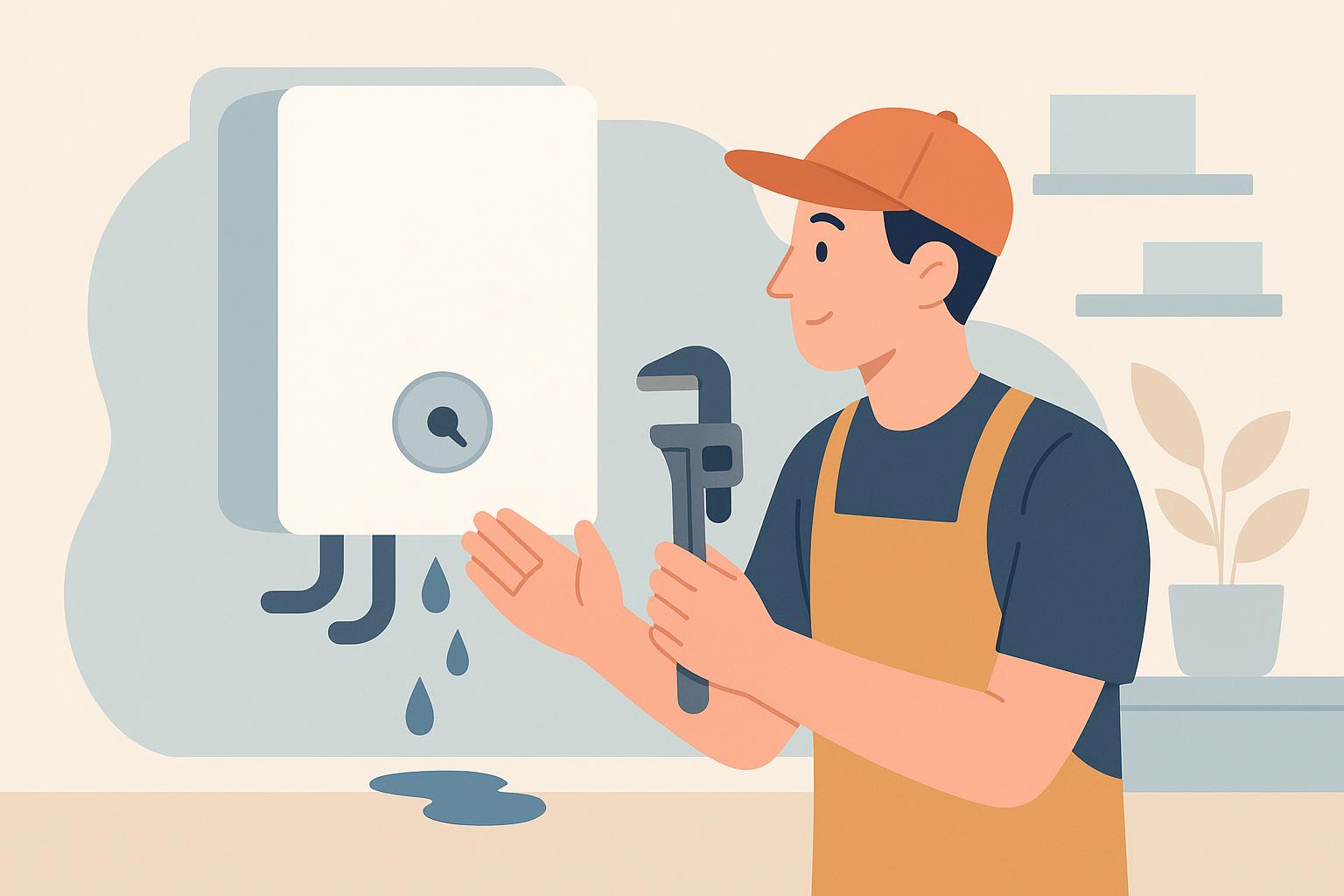
Immediate Safety Steps
1. Turn the boiler off
If you notice water coming from the boiler casing or dripping from pipework underneath, switch the boiler off at the control panel straight away. If you’re unsure, turn it off at the fused spur next to the boiler.
You don’t need to start dismantling anything. Just power it down. Water and electrics don’t mix, and even a small leak can eventually affect internal components.
2. Turn off the water supply if needed
If the leak seems steady rather than a slow drip, you may want to turn off the boiler’s filling loop or the main water supply. Most combi boilers have braided silver hoses underneath with small valves on them. If one of those valves has been left slightly open, it can cause pressure to rise and lead to leaking.
If you’re not confident identifying the right valve, don’t guess. It’s better to leave it off and wait for advice.
3. Catch the water
Place a bowl or towel underneath to prevent damage to flooring or kitchen units. In flats around central Brighton, we often see boilers installed in cupboards above washing machines. A slow drip can run behind units and go unnoticed for days, so keep an eye on it.
If water has reached electrics, stop and call for help straight away.
4. Check the pressure gauge
Most modern boilers have a pressure gauge on the front. It should usually sit between 1 and 1.5 bar when cold. If it’s pushing above 2.5 or 3 bar, that’s often a clue as to why you’ve got a boiler leaking.
Don’t try releasing pressure yourself unless you’re confident. Switching it off and arranging a visit is the safest option.
Common Causes of a Leaking Boiler
Once everything is safe, it helps to understand what might be going on. When customers ask us what to do when a boiler leaks, they’re usually relieved to hear there are a handful of common causes.
Faulty internal components
Over time seals and washers wear out. Inside the boiler you’ve got pumps, heat exchangers and various joints all working under heat and pressure. After several years small leaks can develop.
This is especially common in older systems we see in parts of Hove and Rottingdean where boilers have been running solidly for a decade or more.
High pressure
If the pressure is too high, the boiler may discharge water through the pressure relief valve. You might notice water coming from a copper pipe outside your house. In colder months that pipe sometimes drips steadily onto patios or paths.
This often happens if the filling loop has been left open slightly or if there’s a problem with the expansion vessel.
Corrosion
Boilers and pipework can corrode over time, particularly if the system hasn’t been regularly serviced. You might spot rust around joints or underneath the unit. Corrosion weakens metal and eventually leads to leaks.
Poor installation or loose connections
Occasionally we attend a boiler leaking in Brighton where fittings simply haven’t been tightened properly during installation. Even a small gap in a compression joint can cause a slow drip that worsens over months.
Cracked heat exchanger
This is less common but more serious. If the heat exchanger is cracked, repair can be costly and sometimes replacement is the more sensible option. An engineer will confirm this after inspection.
When to Call an Engineer
If your boiler is actively leaking, the safest course of action is to arrange a qualified Gas Safe engineer. Even if the leak seems minor, internal components are not DIY territory.
You should call an engineer if:
- Water is coming from inside the boiler casing
- The pressure keeps rising above normal levels
- You can see corrosion or rust on pipework
- The boiler keeps switching itself off
- You’re unsure where the leak is coming from
We often arrive at homes where someone has tried tightening random valves after searching what to do when boiler leaks. That can sometimes make things worse. It’s always better to isolate the boiler and get it checked properly.
An experienced engineer will remove the casing safely, inspect seals, test pressure and check the expansion vessel. In many cases, the fix is straightforward once the exact cause is identified.
Frequently Asked Questions
Is a leaking boiler dangerous?
Water itself isn’t usually dangerous, but combined with electrics and gas appliances it becomes a risk. That’s why switching the appliance off is step one.
Can I still use my heating if the leak is small?
We wouldn’t recommend it. A small leak can quickly worsen once the system heats up and pressure increases. Leave it off until it’s inspected.
Does a leaking boiler mean I need a replacement?
Not always. Many leaks are caused by replaceable parts. Age and overall condition matter. If your boiler is over 12 to 15 years old and parts are failing one after another, then it might be worth discussing options.
Why is water dripping outside from a pipe?
That’s often the pressure relief pipe. If it’s dripping steadily, your system pressure may be too high or the expansion vessel may need attention.
Final Thoughts
Discovering a boiler leaking in Brighton can be stressful, particularly in colder weather when you rely on heating and hot water every day. The most important thing is to stay calm, turn the boiler off and avoid poking around inside.
If you’re in and you’re unsure what to do when a boiler leaks, the team at Glowzone deals with these situations every week. At Glowzone we focus on making the situation safe first, then explaining clearly what’s gone wrong and what your options are without any pressure.
If you’ve noticed water around your boiler and would like it checked by a local engineer, Call for boiler a repair.