

A leaking radiator is one of those problems that always seems to show up at the worst time, usually just as the weather turns cold. Whether you are in a Victorian terrace in Hove or a newer build in Rottingdean, even a small drip can lead to damp patches, stained carpets and, in some cases, damage to floors and skirting boards.
If you are already dealing with heating problems, it is worth knowing that experienced plumbing services in Brighton can help if things get beyond a simple fix. But before you pick up the phone, there are a few practical steps you can take to limit the damage and understand what is going on.
Here is a straightforward guide to help you identify the cause, manage the leak safely and decide when it is time to call in a professional.
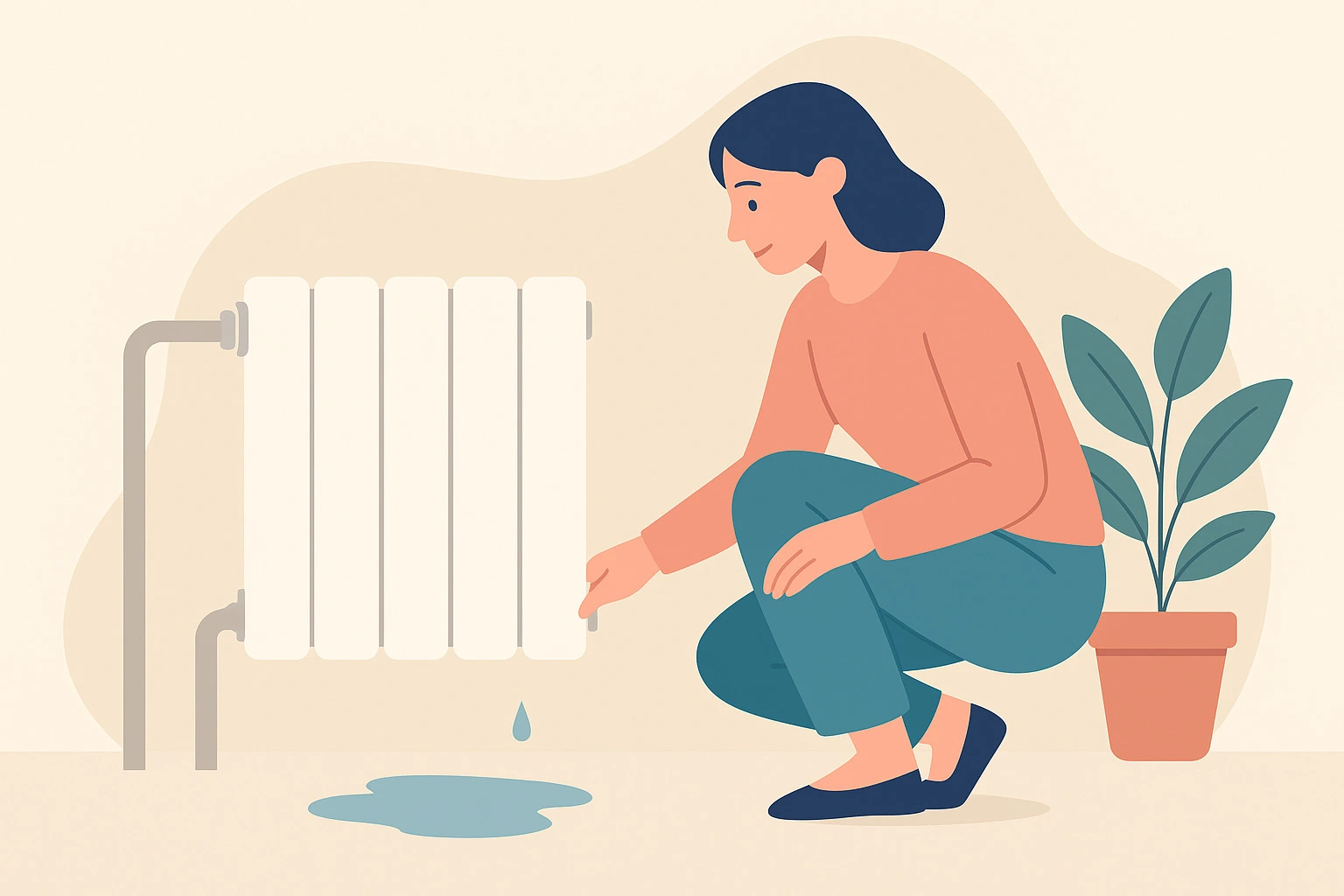
Why a Leaking Radiator Shouldn’t Be Ignored
A slow drip might not look like much at first. Many customers tell us they just put a towel underneath and planned to deal with it later. Unfortunately, even minor leaks can quickly lead to:
- Warped laminate or floorboards
- Damp smells and mould growth
- Corrosion inside the heating system
- Reduced boiler pressure and heating performance
If your boiler pressure keeps dropping and you are constantly topping it up, a radiator leak could well be the reason. Ignoring it tends to make the eventual repair more expensive.
Common Causes of a Leaking Radiator
The good news is that not every radiator leak means a full replacement. In many homes across Brighton and the surrounding areas, the issue comes down to one of these common problems.
1. Loose Valve Connections
The valves at either end of the radiator control the flow of hot water. Over time, the nuts around these joints can loosen slightly, especially after bleeding the radiator or adjusting the valves.
A small leak from the valve connection is often caused by a worn washer or a joint that simply needs tightening.
2. Leaking Radiator Valve
If the leak is coming directly from the valve itself, particularly around the spindle, the internal seal may have worn out. This is more common on older manual valves. It is one reason many homeowners choose to upgrade to thermostatic options. There are clear benefits of getting thermostatic radiator valves fitted, including better temperature control and reduced wear on the system.
3. Corrosion and Pinholes
If you notice water coming from the middle of the radiator panel rather than the sides, corrosion is often the culprit. Sludge and debris in older systems can cause rust from the inside out, eventually leading to tiny pinhole leaks.
In this case, a repair is rarely a long term solution. Replacement is usually the safest option.
4. Leaking Bleed Valve
After bleeding a radiator, the small screw at the top must be properly tightened. If it is slightly loose or the bleed screw seal is damaged, you may see dripping from the top corner.
Step-by-Step: What To Do If Your Radiator Is Leaking
If you spot a leak, try not to panic. Follow these steps to minimise damage and stay safe.
Step 1: Protect the Area
Place a bowl or container under the leak and lay down towels to protect flooring. Water from radiators can be dirty, so avoid letting it soak into carpets.
Step 2: Turn Off the Heating
Switch off your central heating to stop hot water circulating. If the leak is more than a slow drip, turn off the valves at both ends of the radiator by rotating them clockwise.
Step 3: Check the Pressure
Look at your boiler pressure gauge. If it is dropping below normal levels, you may need to top it up temporarily. However, this is only a short term measure if the leak continues.
Step 4: Tighten Connections Carefully
If the leak appears to be from a valve nut, you can try gently tightening it with a spanner while holding the body of the valve steady. Do not overtighten, as this can make things worse.
Step 5: Decide on Repair or Replacement
If the radiator panel itself is leaking due to corrosion, it is usually more practical to replace it. If you are unsure, this is the point where a heating engineer should assess it properly.
When to Call a Professional Heating Engineer
Some leaks are straightforward. Others are a sign of a wider system issue.
You should contact a professional if:
- The leak is coming from the radiator body itself
- Your boiler pressure keeps dropping
- Multiple radiators show signs of rust or sludge
- You feel unsure about isolating the radiator safely
In areas like Hove and Rottingdean, we often see older heating systems where corrosion has built up for years. In those cases, it is not just about fixing one leak but preventing the next one.
Preventing Future Radiator Leaks
Once the immediate problem is sorted, a bit of preventative care goes a long way.
- Have your boiler serviced annually
- Bleed radiators correctly and avoid overtightening
- Consider a system flush if there is sludge build-up
- Fit quality valves and avoid very old parts staying in place too long
One thing we often mention to local homeowners is to keep an eye on small rust bubbles along the bottom edge of radiators. Catching corrosion early can save you from a messy leak later on.
Conclusion: Stay Warm and Leak-Free
A leaking radiator is never convenient, but it is manageable if dealt with quickly. Start by containing the water, isolate the radiator and check for obvious loose fittings. If the issue looks more serious or keeps returning, it is time to get expert help.
For homeowners, tenants and landlords across Brighton and the surrounding areas, Glow Zone regularly helps diagnose radiator leaks, repair faulty valves and replace worn out radiators before they cause major damage.
Contact us today to arrange radiator repairs or replacement.