

If you’ve glanced at your boiler gauge and noticed the needle has dropped, you’re not alone. Loss of pressure is one of the most common calls we get from homeowners and landlords across Brighton and the surrounding areas. As a boiler engineer in Brighton, one of the first things we’re asked is, “Is this serious?”
The short answer is, sometimes yes, but often it’s something straightforward. Understanding what boiler pressure means and why it changes can help you decide whether it’s a quick fix you can handle yourself or time to bring in a professional.
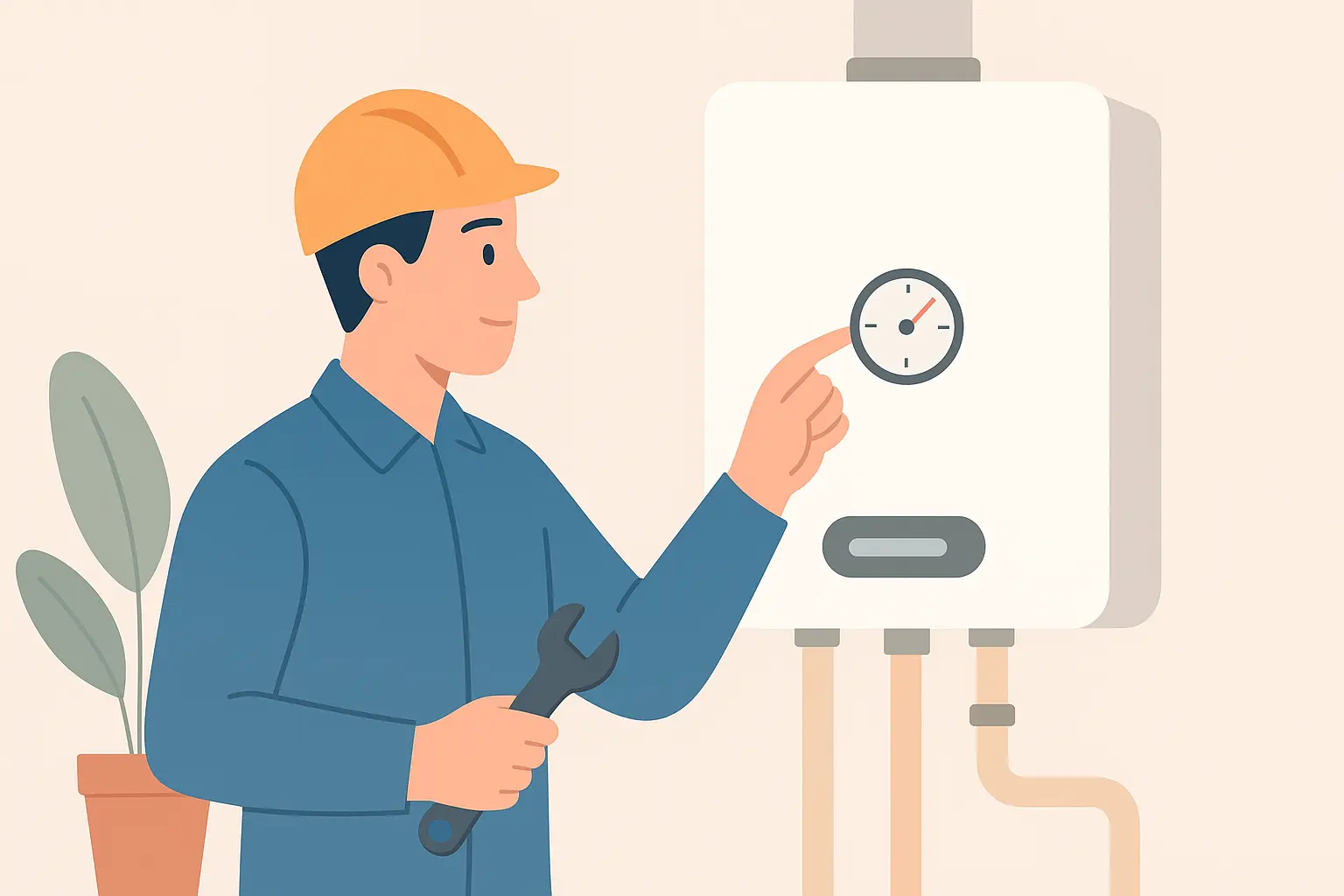
What Boiler Pressure Means and Why It Matters
Your boiler works as part of a sealed central heating system. Water circulates around your radiators and back to the boiler, heating your home and hot water. For this to work properly, the system needs to be pressurised.
Most modern combi and system boilers should sit between 1 and 1.5 bar when the heating is off and cool. When the heating is on, it’s normal for the pressure to rise slightly, usually up to around 2 bar.
If the pressure drops too low, often below 1 bar, the boiler may stop working altogether. You might see a fault code, or the heating just will not fire up. That’s when the house starts feeling chilly and the hot water turns temperamental.
Common Causes of Losing Boiler Pressure
1. A Leak Somewhere in the System
A small leak is one of the most frequent reasons for pressure loss. This could be from a radiator valve, a joint in the pipework, or even under the floor where you cannot see it straight away.
We often get called to properties in Hove where the only sign is a slightly damp patch near a radiator pipe or a bit of staining on the ceiling below an upstairs radiator. Even a slow drip can reduce boiler pressure over time.
If you suspect a leak, check:
- Around radiator valves for moisture
- Underneath the boiler for drips
- Visible pipework in cupboards or under sinks
2. Bleeding the Radiators
If you’ve recently bled your radiators to get rid of cold spots, that can lower the system pressure. When you release trapped air, you also lose a small amount of water.
This is completely normal. It just means you may need to top the system back up afterwards using the filling loop.
3. A Faulty Pressure Relief Valve
The pressure relief valve is a safety device. If the system pressure gets too high, it opens to release water and prevent damage. Sometimes, if it has activated, it does not reseal properly and continues to let water out.
You might notice water dripping from an external pipe outside your property. In Shoreham, we’ve seen plenty of cases where people thought it was just rainwater, but it turned out to be a valve issue. If that’s happening, it’s best to book a qualified heating engineer in Shoreham to take a look.
4. A Faulty Expansion Vessel
The expansion vessel helps regulate pressure as water heats up and expands. If it loses its air charge or fails, you may notice the pressure rising quickly when the heating is on, then dropping when it cools down.
This is not a DIY job. It needs testing with the right equipment and sometimes replacing.
How to Check and Repressurise Your Boiler Safely
Before you do anything, switch the heating off and let the system cool down. Check the pressure gauge on the front of the boiler.
If it’s below 1 bar, you will usually need to top it up using the filling loop. This is a flexible silver hose, often located underneath the boiler.
Here’s a general guide:
- Make sure the boiler is off and cool
- Locate the filling loop and its valves
- Open the valves slowly to allow water into the system
- Watch the pressure gauge carefully
- Close the valves once the pressure reaches around 1 to 1.5 bar
Go slowly. Overfilling can cause the pressure to rise too high, which may trigger the relief valve and leave you back where you started.
After repressurising, turn the boiler back on and keep an eye on it over the next day or two. If the pressure drops again, there is likely an underlying issue that needs attention.
When to Call a Professional
If you’re topping up the pressure every few weeks or even every few days, that is not normal. A sealed system should maintain its pressure for long periods.
It’s time to get expert help if:
- You cannot find the filling loop
- The pressure keeps dropping after topping up
- You notice leaks or damp patches
- The boiler shows persistent fault codes
- The pressure rises rapidly when the heating is on
In these cases, a proper diagnosis is needed. For example, we sometimes attend jobs in Hove where customers think it’s a faulty boiler, but it turns out to be a leaking radiator hidden behind furniture. Other times, it is an internal component that needs replacing.
If your boiler has stopped working altogether, it’s worth reading what to do when your boiler breaks down for practical steps you can take before an engineer arrives.
Preventative Maintenance Tips
While some pressure issues are unavoidable, regular servicing can help catch problems early.
An annual service includes checking:
- The expansion vessel charge
- Pressure relief valve operation
- Visible pipework and joints for leaks
- Overall system pressure and performance
Landlords in particular benefit from keeping on top of this. It reduces emergency callouts in winter when heating systems are under more strain. Homeowners too often tell us they wish they had booked a service sooner, especially after dealing with a cold house in January.
If your boiler is older and repeatedly losing pressure despite repairs, it may be more cost effective to consider a replacement. A modern, efficient system can be more reliable and easier to maintain.
Final Thoughts
A drop in boiler pressure does not always mean a major fault, but it should never be ignored. Start with the simple checks, top it up carefully if needed, and monitor the system. If the problem keeps returning, get it looked at properly before it turns into a bigger boiler repair in Brighton.
If you’re based in Brighton, Hove or Shoreham and need advice you can rely on, the team at Glow Zone are always happy to help. Contact us today to arrange your boiler repair, service or a quote on a new boiler and installation.